Archives
-
Emerging Issues in Digital Technology, Social Media, Cybersecurity, and Information Systems
Vol. 4 No. 01 (2026)The rapid growth of digital technologies and social media platforms has created new opportunities while also introducing significant challenges in cybersecurity, digital communication, legal compliance, and information systems. The increasing use of social media as a source of digital evidence raises concerns regarding legal validity, privacy protection, and ethical data collection practices. At the same time, the widespread presence of automated bot accounts on platforms such as Instagram threatens the authenticity of online interactions and facilitates the spread of spam, misinformation, and opinion manipulation. Social media platforms like TikTok have also evolved into spaces for emotional expression among Generation Z, but this trend has been accompanied by a growing incidence of cyberbullying and other forms of harmful online behavior. In parallel, the growing dependence on internet connectivity highlights the need to evaluate network performance and Quality of Service (QoS) to ensure reliable communication and user satisfaction. Furthermore, as digital applications become increasingly integrated into everyday life, assessing user experience and usability through standardized evaluation methods is essential for improving application quality and user acceptance. Collectively, these issues underscore the need for interdisciplinary research addressing legal, ethical, technical, and human-centered aspects of contemporary digital technologies.
-
Digital Transformation and Its Impact on Behavior, Literacy, and Information Security
Vol. 3 No. 2 (2025)This theme represents a comprehensive examination of digital transformation as a central force shaping human behavior, information systems, and learning processes in the modern era. The rapid development of digital technologies—ranging from social media and artificial intelligence to blockchain and mobile applications—has fundamentally changed how individuals interact, access information, and make decisions in digital environments.
The theme integrates social, educational, and technological perspectives by emphasizing how digital innovation can be strategically utilized to enhance digital literacy, improve learning outcomes, influence consumer behavior, and strengthen the security and reliability of information systems. It highlights the growing need for responsible, adaptive, and ethical use of technology to address challenges such as information overload, algorithmic influence, and cybersecurity threats.
Through an empirical and interdisciplinary approach, this theme underscores the importance of aligning technological advancement with human development, ensuring that digital transformation contributes positively to societal resilience, knowledge dissemination, and the sustainability of digital ecosystems.
-
The Role of Digital Technology in Enhancing Education, Security, and Business in the Modern Era
Vol. 3 No. 01 (2025)This theme explores how digital technology is transforming key aspects of modern life, particularly in the fields of education, cybersecurity, and business. In education, digital tools such as game-based applications, mobile apps, and UI/UX design are enhancing learning experiences and accessibility. In the area of cybersecurity, technologies like Wireshark and blockchain-based intrusion detection systems are being used to monitor and protect digital networks. In the business sector, digital strategies—especially those involving AI personalization and social media marketing—are helping companies engage more effectively with consumers. Overall, the integration of digital technology is driving innovation, efficiency, and security across various domains in the modern era.
-

Optimizing Multimedia for Education, Design, and Tourism in the Digital Era
Vol. 2 No. 2 (2024)This theme explores the integration of multimedia technologies to enhance education, design, and tourism in the digital age. It emphasizes the role of innovative tools and platforms, such as user-friendly design software, social media applications, and interactive interfaces, in transforming traditional practices. By leveraging multimedia, we can create engaging educational content, impactful designs, and immersive tourism experiences that cater to the needs of a tech-savvy generation.
-
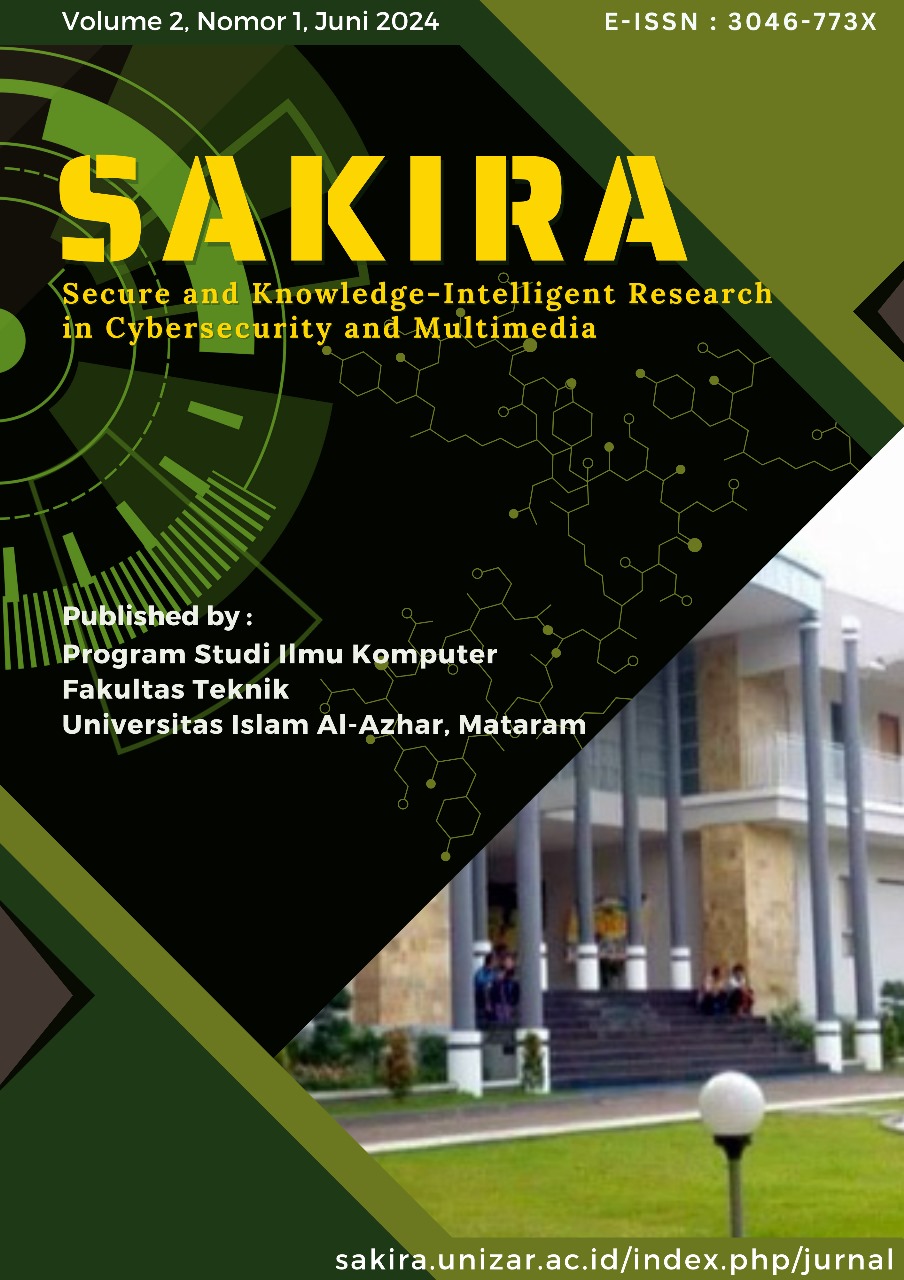
Multimedia Integration and computer networks in the Development of Modern Information Systems
Vol. 2 No. 1 (2024)This journal explores the pivotal role of multimedia integration and computer networks in the evolution and development of modern information systems. It delves into how multimedia elements—such as text, graphics, audio, and video—are increasingly being incorporated into information systems to enhance user experience, communication, and data visualization.
This journal aims to provide a comprehensive understanding of the symbiotic relationship between multimedia and computer networks in modern information systems, offering insights and practical solutions for researchers, developers, and industry professionals.
-

Journal of SAKIRA (Secure And Knowledge-Intelligent Research in Cybersecurity And Multimedia)
Vol. 1 No. 2 (2023)In Volume 1, Issue 2 of the "Journal of Secure And Knowledge-Intelligent Research in Cybersecurity And Multimedia," an article delves into the pivotal role of virtual routers in enhancing cyber security measures. This article likely explores how virtual routers contribute to securing network infrastructure, managing network traffic, and mitigating various cyber threats. It may discuss the advantages of virtual router technologies in terms of flexibility, scalability, and cost-effectiveness compared to traditional hardware routers. Furthermore, the article may delve into specific techniques, best practices, and case studies illustrating the effectiveness of virtual routers in strengthening cyber security defenses. Overall, the article serves to provide insights and knowledge for researchers, practitioners, and policymakers interested in leveraging virtual router technologies to bolster cyber security strategies
-

Journal of SAKIRA (Secure And Knowledge-Intelligent Research in Cybersecurity And Multimedia)
Vol. 1 No. 1 (2023)The article in vol. 1, no. 1, discusses the role of digital systems and computer organization in the context of the development of information technology in the modern era. Students as agents of change in the academic and industrial world are expected to understand, adopt, and optimize digital systems and computer organization to support rapid technological development.